Introduction:Delhi Blast 2025
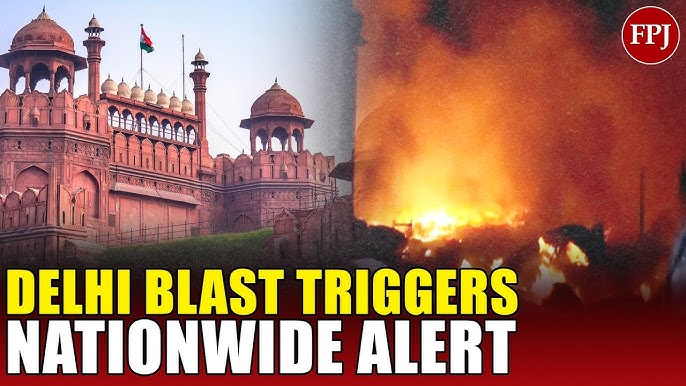
On the evening of 10 November 2025, the capital city of India, Red Fort adjacent areas in New Delhi, was jolted by a sudden, devastating explosion. This incident—commonly referred to as the “Delhi Blast”—has reopened old wounds for a city long familiar with terror attacks, while also forcing a fresh examination of security, preparedness, and the social fabric of the metropolis.
In this detailed post, we will explore the incident itself, review Delhi’s troubled history of blasts, examine causes and consequences, and consider what it means for the future of the city’s safety and resilience.
The Incident – What Happened?:Delhi Blast 2025
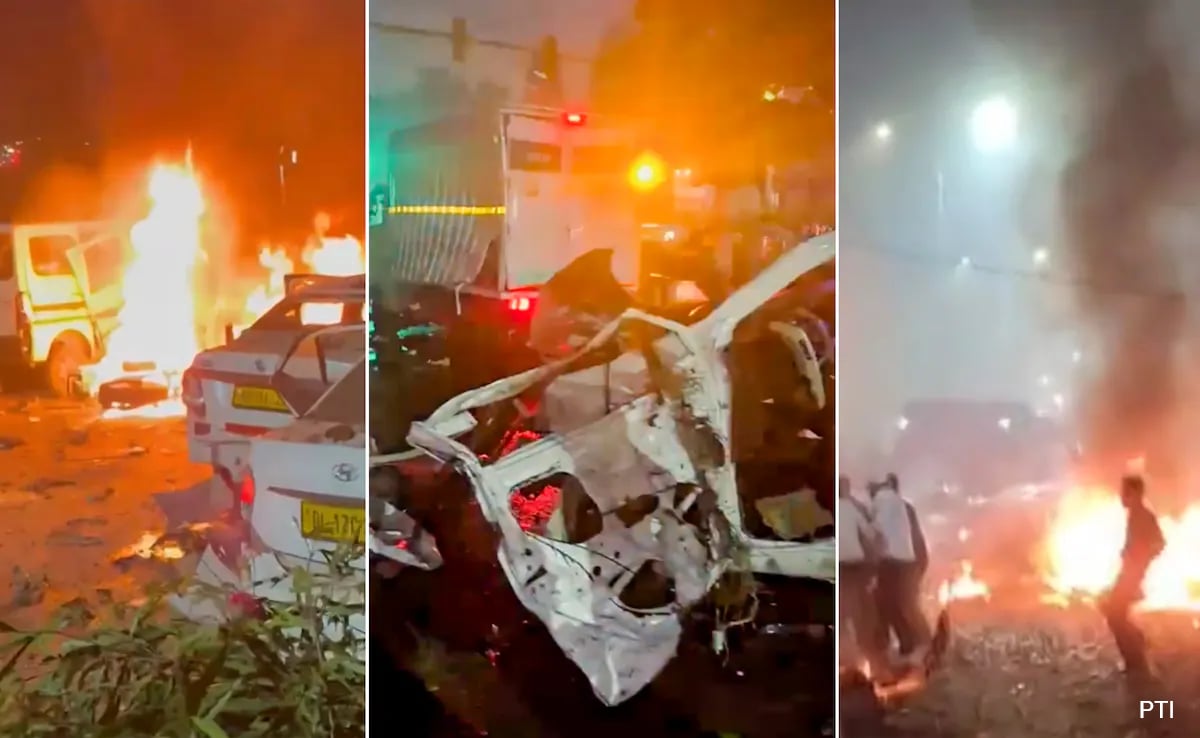
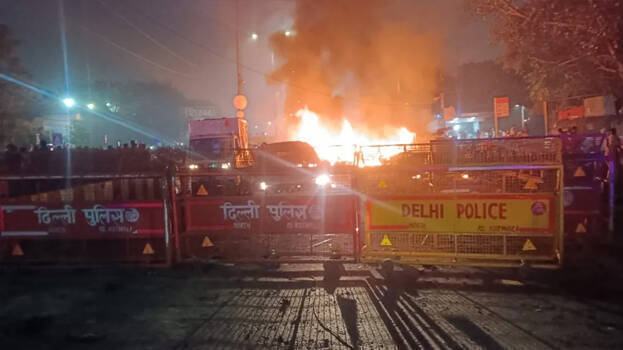
On 10 November 2025, a car exploded near Gate No. 1 of the Red Fort Metro station in Old Delhi, around the Subhash Marg traffic signal. National Herald+3Moneycontrol+3AP News+3
Key facts:
- The vehicle, identified in various reports as a Hyundai i20, stopped at a red light before the delhi blast. AP News+1
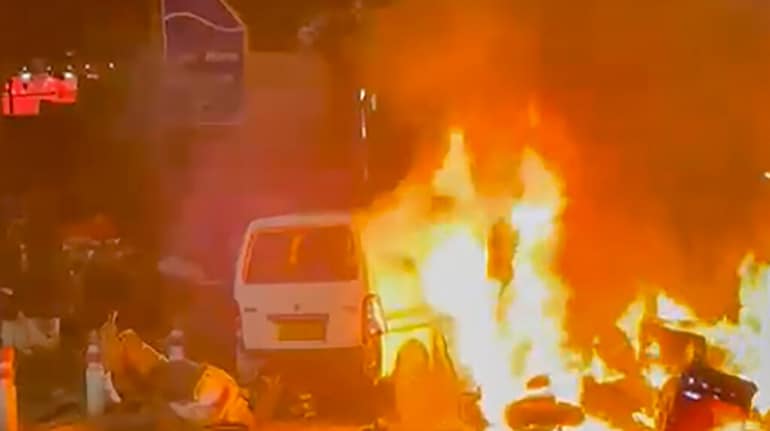
- The explosion triggered a fire that also engulfed several nearby vehicles, and the shock waves damaged windows and infrastructure in the area. The Guardian+1
- At least eight people were confirmed dead and dozens injured; investigations were initiated by federal agencies. AP News+1
- The blast took place in a densely populated, historic area — the Red Fort is a major tourist and national symbol site. The Guardian+1
- In the immediate aftermath, security was heightened across the National Capital Region (NCR) and other states. Reuters+1
Why this matters
This blast is significant for a number of reasons: the location (symbolic, crowded, historic), the timing (evening, heavy foot-traffic), and the reminder that despite years of counter-terrorism efforts, the threat of large-scale explosions remains very real in Delhi. As one commentary put it, the “first major blast in 14 years” in Delhi. Moneycontrol
A Brief History of Blasts in Delhi:Delhi Blast
To understand this incident in context, it’s crucial to look back at the history of blasts in Delhi — how the city has been repeatedly targeted, the patterns, and how this newest episode fits into that legacy.
Early and 1990s incidents
- In May 1996, a bomb ripped through the Lajpat Nagar market in Delhi, killing 13 and injuring many more. Wikipedia+1
- In 1997, multiple blasts took place in busy markets such as Karol Bagh, Sadar Bazaar, Rani Bagh, even in moving vehicles. PTC News+1
2000s – Large coordinated attacks
- On 29 October 2005, a series of three explosions in Sarojini Nagar, Paharganj, and a bus in Govindpuri killed 62 people and wounded over 200. Wikipedia+1
- On 13 September 2008, five simultaneous delhi blast (including Connaught Place, Karol Bagh and Greater Kailash) killed about 20–30 people and injured over 90. Wikipedia+1
2010s and beyond
- On 7 September 2011, a briefcase bomb outside the High Court in Delhi killed 15 and injured 79. Wikipedia+1
- After that, though there were smaller incidents, large-scale blasts in the national capital were comparatively fewer — until the 2025 event.
What the patterns show
- Many blasts targeted crowded markets, transit hubs or symbolic public sites. PTC News+1
- The motive, perpetrators and methods varied — sometimes local extremist cells, sometimes trans-border links, often designed to maximise panic and public disruption.
- Delhi’s history suggests that security in high-density, high-symbolism zones is especially vulnerable. The newer blast near the Red Fort underscores that.
Why This Blast Matters More:Delhi Blast 2025
There are several reasons why the 2025 Delhi blast stands out and demands attention beyond the tragic immediate loss of life.
Symbolic target
The Red Fort is not just a historic monument; it is a symbol of national identity (Independence Day speech site, tourist landmark). An attack here attacks both lives and psyche. The fact that the explosion occurred in the precincts of this monument is thus especially disturbing. National Herald+1
Location & timing
The blast occurred in a crowded public place, evening rush hour, near a metro station and traffic signal — meaning the potential for damage, casualties and ripple effects was high. The blast also damaged surrounding vehicles and infrastructure, amplifying the chaos. The Guardian+1
Resurgence after a lull
With the last major blast (2011) now several years behind, Delhi blast had enjoyed a measure of relative calm from large-scale terror blasts. This explosion thus shakes confidence: the threat is still very much present. Moneycontrol+1
Potential implications for security, economy and public life
Beyond casualties, such an incident impacts public confidence, tourism, daily commuting, emergency preparedness and disaster management. It demands a re-examination of how we safeguard public places and respond when disaster strikes.
Causes, Investigation & Current Status:Delhi Blast 2025
While the full outcome of investigations may take time, the available information highlights key themes.
What we know so far
- The vehicle involved was parked at a traffic signal near the Red Fort Metro station and then exploded. Moneycontrol
- Fire tenders and emergency services responded quickly, but the damage was substantial. The Guardian
- The government has activated high-alert protocols in Delhi and elsewhere; forensic teams and federal agencies are involved. AP News+1
Under investigation
- Authorities are treating it as a possible terror‐related incident; laws like the Unlawful Activities (Prevention) Act (UAPA) may be invoked. Reddit
- Investigators will focus on the origin of the vehicle, contents of the explosion, whether it was a conventional bomb or other device, and potential networks behind it.
- One challenge: densely built historic zones like Old Delhi have complex layouts, old infrastructure, limited surveillance and high human density — making both prevention and investigation harder.
Key questions yet to be answered:Delhi Blast 2025
- What was the motive and who orchestrated the attack?
- How did the explosive device get placed, with what kind of security breach?
- Why was such a significant target selected? — Is this part of a larger pattern or a lone attack?
- What are the gaps in intelligence, surveillance and public safety that allowed this to happen?
Impact – Immediate and Long-Term:Delhi Blast 2025
The effects of this incident span personal, social, economic, and security dimensions.
Human & emotional cost
- At least eight people lost their lives, and dozens of others were injured. Families, bystanders, nearby residents all face trauma, loss and disruption. Reuters+1
- Witness accounts: shock, chaos, panic, vehicles ablaze, windows shattered. These kind of visuals leave lasting psychological scars on survivors and the community. The Guardian+1
Public confidence & urban rhythm
- For many residents and commuters, the blast shakes the sense of safety on roads, metro stations, busy urban spaces.
- Tourists visiting the Red Fort and Old Delhi may have heightened concerns; tourism and local businesses may see fallout.
- Daily life: traffic diversions, enhanced security checks, disruptions in metro services and local markets — all of which may have short-term inconvenience and longer-term behavioural change.
Security & policy ramifications
- Authorities will revisit how to secure historical monuments, crowded transit hubs and high-footfall public areas.
- The incident will likely trigger reviews of intelligence sharing, vehicle tracking, surveillance cameras, bomb-disposal readiness, evacuation plans and coordination between agencies.
- It may prompt policy debates around civil liberties vs security, budgeting for anti‐terror infrastructure, and public awareness campaigns.
Economic implications
- While the blast itself is a tragedy, from an economic reading there may be costs: damage to vehicles/infrastructure, cleanup, increased security deployments, potential drop in foot‐traffic for nearby businesses, insurance costs, and possible slowdown in tourism in the short term.
- More broadly, cities with frequent security incidents carry added risk premiums for investment, real-estate valuations in affected areas, and urban development planning.
Learning & Resilience – What Can Be Done?:Delhi Blast 2025
In the wake of such an event, the discussion inevitably turns to what we can learn, how to strengthen resilience, and what individuals and institutions can do to reduce risk and improve response.
For government, agencies & urban planners:Delhi Blast 2025
- Risk mapping & vulnerability scanning: Identify key high-traffic zones, heritage monuments, metro hubs, busy markets. Map their vulnerabilities (vehicles allowed, parking zones, surveillance blind spots, emergency exit access).
- Vehicle screening & access control: In areas like the Red Fort precinct, stricter parking rules, barriers for high-risk vehicles, smart technology (number plate recognition, CCTV analytics) could help.
- Emergency preparedness and drills: Regular simulation of blast/terror-scenarios, better coordination among police, fire services, hospitals, traffic management. For example, how to clear the area, evacuate injured, cordon off quickly, and restore order.
- Surveillance & intelligence: Expand CCTV coverage, integrate with real-time analytics, unusual behaviour detection, crowd‐monitoring, vehicle anomaly detection. Improve inter-agency data flow (police, intelligence, transport).
- Public awareness & training: Citizens can help—report unattended vehicles, maintain alertness in public spaces, know evacuation routes, and be informed of what suspicious objects/behaviour might look like.
- Heritage site security: Historic monuments like the Red Fort require special protection: visitor screening, vehicle checkpoints, defined buffer zones, controlled parking, clear signage, and public awareness about restricted zones.
For individuals & local communities
- Stay alert: In crowded areas, especially near parking zones, heavy traffic signals, or historic monuments, being aware of your surroundings is key.
- Preparedness mindset: Know exits, keep an eye on traffic flow, avoid stopping for long in high-risk zones (if applicable). In the event of a blast, cover your ears, take shelter, move away from damaged vehicles, follow instructions of authorities.
- First‐aid & bystander support: Knowing basic first-aid, helping injured to the extent you can safely, reporting to emergency services can make a difference in the golden minutes after a blast.
- Community vigilance: Neighbourhood groups, resident welfare associations (RWAs) can participate in local security meetings, ensure parking regulations are followed, liaise with local police, and spread awareness to children and elderly on safe behaviour.
Building long-term resilience:Delhi Blast 2025
- Psychological support: Post-incident trauma is real. Providing counselling, helping children and families recover emotionally is as important as physical rebuilding.
- Urban design for safety: Designing public spaces to incorporate blast mitigation—setbacks for vehicle parking, pedestrian zones, wide traffic medians, reinforced infrastructure, explosion‐resisting elements where possible.
- Regular review & adaptation: Threats evolve; use past incidents as lessons (for example, how the 2005 blasts or 2008 blasts impacted Delhi) to update protocols, training, technology. PTC News+1
- Public-private cooperation: Businesses near high risk zones (markets, tourist areas) can collaborate with government on evacuation planning, security drills, and secure infrastructure.
Why This Story Matters for SEO & Public Awareness
From an SEO vantage point, writing on “Delhi blast2025” or “Delhi explosion 2025” remains highly relevant: many readers will search for the latest updates, background history, safety tips, government response, and implications for travel and daily life. By providing a comprehensive, human-centered, well-structured post you not only cater to search-intent but also serve public interest.
Common Questions (FAQs):Delhi Blast 2025
Q1. Was this blast the first in Delhi in recent years?
Not quite the first ever, but it was the first major, high-casualty blast in Delhi since the 2011 High Court bombing. Moneycontrol+1
Q2. Is the motive known?
As of now the motive is under investigation. Authorities are considering terror-angle, vehicle bomb scenario, but no official culprit has been publicly confirmed.
Q3. Are historic monuments more vulnerable?
Yes — monuments like the Red Fort draw large crowds, have symbolic value, and often have complex surrounding infrastructure (markets, transit nodes, parking). That makes them higher‐risk zones. Delhi’s history bears that out. National Herald+1
Q4. What should I do if I’m in Delhi or visiting?
- Stay alert in crowded areas, especially near traffic signals, parking zones, vehicle‐heavy spots.
- If you notice an unattended vehicle or suspicious behaviour, report it to police.
- Be aware of exits and emergency routes when you are near major monuments or transit hubs.
- Follow instructions of authorities during emergencies; don’t crowd rescue operations or impede first responders.
Q5. How are authorities responding?
In this case, Delhi Police, the forensic science laboratory, and central agencies have been activated. Security has been heightened across the city and neighbouring states. The Times of India+1
Conclusion:Delhi Blast 2025

The Delhi blast of November 2025 is much more than an isolated incident. It is a painful reminder of past tragedies, a challenge for the present, and a test for future resilience. For a city as populous, diverse and historic as Delhi, the stakes are high — not only in terms of lives lost, but in terms of collective confidence, civic strength, and the ability of institutions and citizens to respond together.
From the market-blasts of the 1990s to the coordinated attacks in 2005 and 2008, then to the relative calm and now to this new shock, one lesson stands clear: vigilance, preparedness and community-solidarity matter. The physical scars will heal, but the psychological ones will linger unless addressed. And above all, a city thrives when its people believe in the safety of its public spaces, the reliability of its institutions, and the shared commitment to protect one another.
As Delhi rebuilds from this, let each of us do our part — whether by staying alert on the street, supporting community safety efforts, or simply not taking our public-space security for granted. Because in a city that never stops moving, every minute of preparedness counts.
The Delhi Blast 2025 has left an unforgettable mark on India’s capital, shaking the hearts of millions and reminding the nation that security and vigilance can never be taken for granted. This tragic incident near the iconic Red Fort has not only caused loss and destruction but also sparked a collective call for unity, awareness, and stronger preparedness.
The explosion that occurred during peak evening hours highlighted how vulnerable even the most secure areas can be. As investigations continue, authorities are working around the clock to uncover the truth behind the Delhi Blast 2025, ensuring that those responsible are brought to justice. Citizens across the city are cooperating with officials, showing remarkable courage and resilience in the face of fear.
Beyond the immediate impact, the Delhi Blast 2025 serves as a wake-up call for better urban safety, smarter surveillance systems, and quicker emergency response mechanisms. The lessons learned from this tragedy will shape how Delhi — and India as a whole — prepares for future challenges. Every roadblock, metro station, and heritage site now reminds people of the importance of staying alert and responsive to any unusual activity.
The most inspiring aspect emerging from the Delhi Blast 2025 is the spirit of Delhiites themselves. From local vendors and commuters who helped victims, to hospitals and volunteers who worked tirelessly through the night, the city once again proved that its strength lies in its people. Their compassion and unity turned a moment of chaos into a testament of humanity’s endurance.
Government agencies have stepped up security measures across Delhi, conducting thorough investigations, enhancing CCTV coverage, and setting up rapid response units around sensitive zones. This proactive approach aims to rebuild public confidence after the Delhi Blast 2025. Citizens, too, are becoming more aware of how small actions — like reporting suspicious vehicles or objects — can prevent major tragedies.
The Delhi Blast 2025 will be remembered not just as a tragic event, but as a turning point for the city’s safety and solidarity. It’s a moment that challenges everyone — from policymakers to everyday citizens — to prioritize vigilance, empathy, and cooperation. Delhi has survived storms before, and with the lessons learned from this blast, it will rise stronger, safer, and more united than ever.
As the investigation unfolds and justice takes its course, what remains certain is that the capital’s heartbeat cannot be silenced. The spirit of Delhi continues to shine, proving that while explosions can destroy buildings, they cannot destroy hope. The Delhi Blast 2025 may have left scars, but it has also ignited a renewed determination among people to protect their city and stand together in resilience.
The road to healing will take time, but the message is clear: Delhi will not be defined by fear — it will be defined by courage, compassion, and community. The Delhi Blast 2025 stands as both a reminder and a promise — that out of every tragedy, a stronger, more united Delhi will always rise.
For More Details Visit-https://movenextstep.online